

Welcome again to another journey along The Hitchhiker’s Guide to Medicine! Today, we will explore an exciting discovery made by scientists that sheds light on why our grandparents, and older people in general, tend to move slowly.
As we age, it’s a well-known fact that our movements tend to slow down. A recent study conducted by researchers from the University of Colorado Boulder sheds light on why this happens. The study suggests that older adults may move slower partially because it costs them more energy to do so compared to younger individuals
The research focused on the energy expenditure required for movement in older adults versus younger adults. It was observed that as people age, their bodies become less efficient at conserving energy during physical activities. This inefficiency means that older adults need to exert more effort and energy to perform the same movements that younger people can do more easily. Therefore, older adults moved slower because they wanted to conserve this more limited energy supply.
But why? As aging occurs in individuals, the mitochondrion organelle within each cell begins to break down. Mitochondria are often referred to as the powerhouses of the cell because they generate the energy required for various cellular functions through the production of ATP (adenosine triphosphate). With age, mitochondrial efficiency decreases due to several factors.
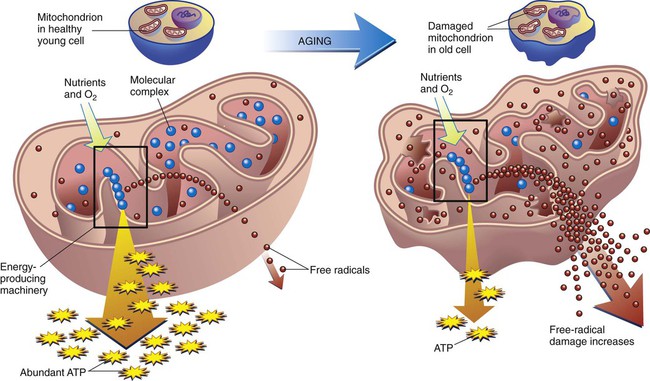
- Accumulation of Oxidative Damage:
- Mitochondria are the main source and target of reactive oxygen species (ROS), which are byproducts of normal metabolic processes.
- Over time, the accumulation of ROS can damage mitochondrial DNA (mtDNA), proteins, and lipids.
- This oxidative damage limits the function of the electron transport chain, a chain of reactions within the mitochondria responsible for ATP production.
- Susceptibility and Mutations in mtDNA:
- mtDNA is more susceptible to damage than nuclear DNA, leading to a rapid accumulation of mutations in mitochondrial genes.
- These mutations can result in dysfunctional proteins within the electron transport chain, reducing ATP production efficiency.
- Unlike nuclear DNA, mtDNA has limited repair mechanisms, so damage accumulates with age.
- Decline in Mitochondrial Biogenesis:
- Mitochondrial biogenesis, the process by which new mitochondria are formed, declines with age.
- This leads to a reduction in the production of new, healthy mitochondria, leaving older cells with a higher proportion of damaged and less efficient mitochondria.
- Factors regulating mitochondrial biogenesis, such as the transcription coactivator PGC-1α, decrease in activity with age.
- Imbalance in Mitochondrial Dynamics:
- The dynamics of mitochondrial fusion (joining together) and fission (splitting apart) become imbalanced with age.
- In healthy cells, these processes help maintain mitochondrial function and quality.
- An imbalance leads to the accumulation of fragmented and dysfunctional mitochondria, further reducing cellular energy production.
Understanding the relationship between aging and energy expenditure has important implications for improving the quality of life for older adults. By recognizing that higher energy costs are a natural part of aging, healthcare providers can develop targeted interventions at a cellular level to help older individuals maintain their mobility and independence. Stay tuned to “The Hitchhiker’s Guide to Medicine” as we uncover more marvels and milestones in the field of medical science. Until then, keep exploring and stay curious!
 A Hitchhiker's Guide to Medicine
Leave a comment