
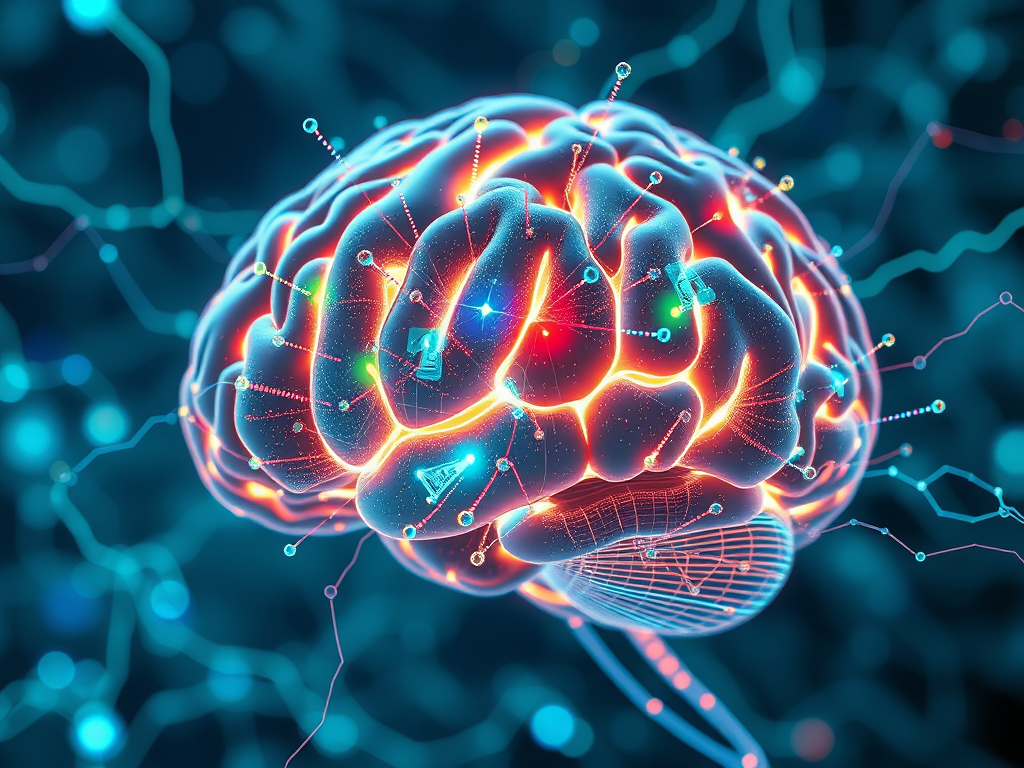
Welcome back to another adventure along The Hitchhiker’s Guide to Medicine! My name is Rishi, and I would like to introduce you to the first installment of a new branch of The Hitchhiker’s Guide to Medicine — Neuroscience and AI.
We’re living in a strange, extraordinary moment. Artificial intelligence is writing poems, driving cars, detecting cancers—and somewhere in all this, it’s also starting to resemble the very thing it was inspired by: the human brain. This blog series—Neuroscience x AI—aims to explore how two of the most fascinating fields of our time are converging. You don’t need to be a neuroscientist or a computer engineer to follow along. If you’ve ever wondered how your brain processes a sentence or how ChatGPT generates one, you’re in the right place.
But what do I even mean by “Neuroscience”, or even “AI”? Let’s first define our terms.
- Neuroscience is the study of the nervous system, especially the brain. It looks at how we think, move, feel, remember, and even dream.
- Artificial Intelligence (AI) refers to machines that mimic human-like intelligence—learning, reasoning, recognizing patterns, and making decisions.
At first glance, these might seem like opposite worlds: one squishy and biological, the other digital and silicon-based. But both are trying to answer the same question: How does intelligence work?
As someone fascinated by both the biology of the brain and the design of artificial yet intelligent systems, I’ve spent the last few years researching MRI technologies, medical imaging, and algorithmic decision-making. What I found is that understanding the brain not only helps us build better machines—it also helps us build better medicine. This series will touch on:
- How brain scans inspire neural network designs
- How AI helps decode diseases like Alzheimer’s
- How ethics get messy when AI interprets your thoughts
- Why machine learning might one day help us understand consciousness itself

My goal here is to make the complex feel curious and understandable. Each post will try to demystify high-level science without oversimplifying it—and maybe have a little fun along the way. Neuroscience and AI aren’t just hot topics—they’re reflections of our deepest questions about thought, learning, and what it means to be alive. Whether you’re a med student, a curious coder, or just someone fascinated by how thought becomes action, I invite you to take this journey with me.
Stay tuned to “The Hitchhiker’s Guide to Medicine” as we uncover more marvels and milestones in the field of Neuroscience and AI. Until then, keep exploring, and stay curious!
 A Hitchhiker's Guide to Medicine
Leave a comment