

Welcome back to another adventure along The Hitchhiker’s Guide to Medicine! Today, we look at a unique study that highlights the ability of antibiotics, vaccines, and antivirals in lowering dementia risk.
Glucagon-like peptide-1 receptor agonists (GLP-1 RAs), commonly used to treat type 2 diabetes and obesity, are now being explored for their effects on brain health. Recent studies suggest they may offer neuroprotective benefits, but concerns have also emerged regarding their potential impact on mental health, particularly depression and suicidal ideation.
GLP-1 medications, such as semaglutide and liraglutide, have shown promise in protecting brain function. Research suggests they can:
- Reduce neuroinflammation – Chronic inflammation in the brain is linked to neurodegenerative diseases like Alzheimer’s and Parkinson’s. GLP-1 drugs may help mitigate this.
- Improve synaptic function – Enhancing connections between neurons could support memory and cognitive performance.
- Regulate brain insulin signaling – Dysfunctional insulin signaling in the brain is associated with cognitive decline, and GLP-1 drugs may help restore this balance.
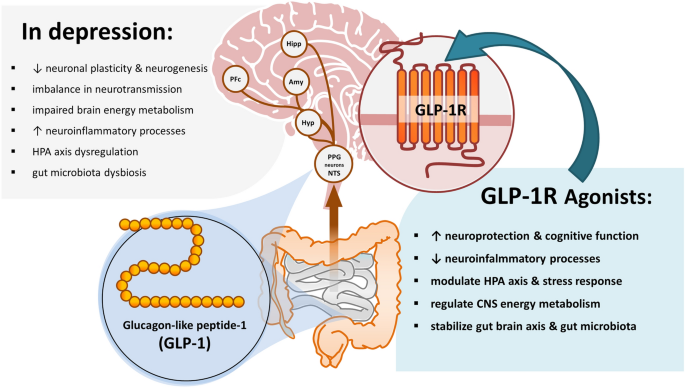
A recent study highlighted the potential for these medications to reduce harmful proteins and inflammation in the brain, suggesting they may slow neurodegeneration.
Despite these benefits, some reports raise concerns about mental health risks associated with GLP-1 medications:
- Case reports suggest some individuals experience worsening depression or suicidal thoughts while taking these drugs.
- A large study on liraglutide found a slight increase in the risk of suicidal behavior.
However, the evidence is not clear-cut. In contrast, a study analyzing data from over 3 million people with diabetes found that those on GLP-1 drugs had a 45% lower risk of depression and a 44% lower risk of anxiety compared to those not taking them.
Adding to the debate, the European Medicines Agency (EMA) conducted a large-scale review and found no significant link between GLP-1 drugs and increased suicide risk, based on health records from thousands of patients.
The impact of GLP-1 drugs on brain health is still being studied, and their effects on mental health remain uncertain. While some evidence suggests they could protect against cognitive decline and even reduce depression and anxiety, isolated reports raise concerns about potential mood-related side effects.
For now, the best approach is cautious optimism—patients taking these medications should be monitored for any mental health changes, and future research will be critical in determining their long-term safety and efficacy for brain health.
Stay tuned to “The Hitchhiker’s Guide to Medicine” as we uncover more marvels and milestones in the field of medical science. Until then, keep exploring, and stay curious!
 A Hitchhiker's Guide to Medicine
Leave a comment