
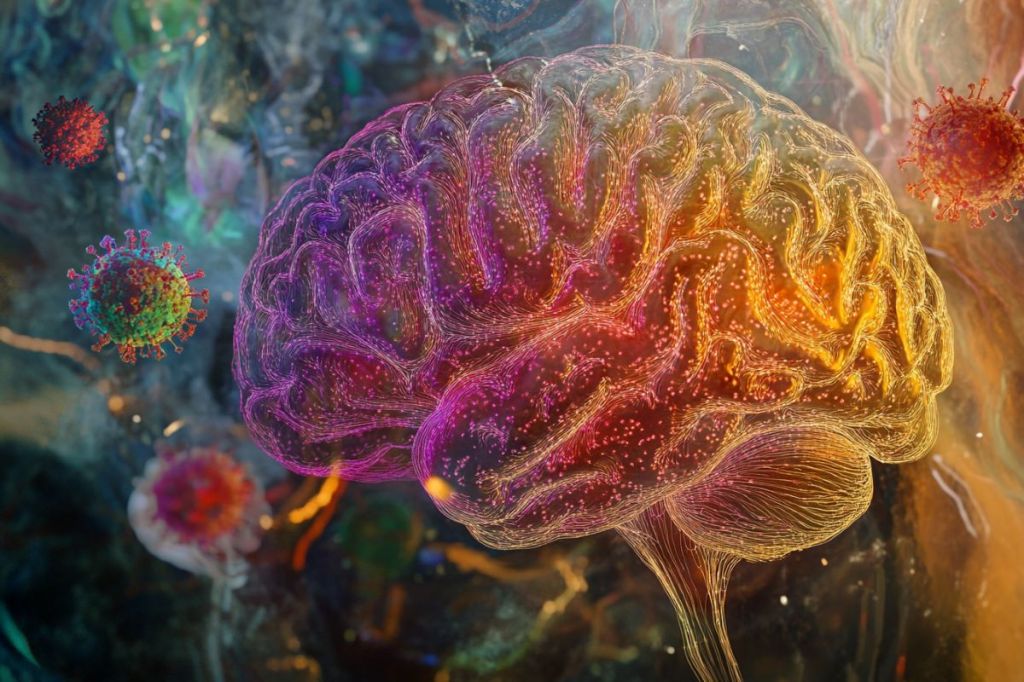
Welcome back to another adventure along The Hitchhiker’s Guide to Medicine! Today, we examine an “infectious” research study connection cold sores to Alzheimer’s Disease!
Alzheimer’s disease (AD) is the leading cause of dementia, affecting millions worldwide. While age, genetics, and lifestyle are well-known risk factors, emerging research suggests a surprising potential link: herpes simplex virus type 1 (HSV-1), the virus responsible for cold sores. Could a common virus play a role in the onset or progression of Alzheimer’s? Let’s dive into the evidence.
HSV-1 is a highly prevalent virus, with the World Health Organization (WHO) estimating that two-thirds of people under 50 are infected globally. It causes cold sores and can remain dormant in nerve cells for long periods, reactivating due to stress, illness, or weakened immunity.
While typically confined to the facial region, HSV-1 can travel to the central nervous system (CNS), raising questions about its role in neurodegenerative diseases.
The connection between HSV-1 and Alzheimer’s lies in how the virus behaves in the brain. Here are some key findings:
- HSV-1 DNA has been found in brain regions most affected by Alzheimer’s, such as the hippocampus, which is essential for memory. This suggests a possible link between the virus and the disease.
- Alzheimer’s is characterized by amyloid-beta plaques, often viewed as harmful accumulations. However, some studies suggest that amyloid-beta may act as an immune response, trapping pathogens like HSV-1. This defense mechanism could inadvertently lead to the plaque buildup seen in Alzheimer’s.
- Reactivation of dormant HSV-1 in the brain can trigger inflammation and oxidative stress. Over time, repeated episodes of this reactivation may damage neurons, contributing to cognitive decline.
- The APOE-ε4 gene, a known Alzheimer’s risk factor, may make individuals more vulnerable to HSV-1 infections in the brain, amplifying the risk of developing the disease.

Despite the intriguing evidence, the HSV-1 and Alzheimer’s link is far from settled. Critics argue that HSV-1 is so widespread that its presence in Alzheimer’s brains could be coincidental. Additionally, not everyone with HSV-1 develops Alzheimer’s, indicating that other factors, like genetics and lifestyle, likely play a significant role.
Further research is needed to establish whether HSV-1 directly contributes to Alzheimer’s or simply exacerbates other risk factors.
If HSV-1 is confirmed as a contributing factor in Alzheimer’s, it could open up new possibilities for prevention and treatment:
- Antiviral Drugs: Medications like acyclovir, used to manage HSV-1 infections, could potentially limit brain damage from viral activity.
- Vaccination: Developing vaccines against HSV-1 may reduce the overall risk of infection and its complications.
- Targeting Neuroinflammation: Treatments aimed at reducing inflammation caused by viral reactivation could protect the brain from long-term damage.
While the science evolves, there are steps you can take to promote brain health and reduce the risk of viral reactivation:
- Adopt a Healthy Lifestyle: Regular exercise, a nutrient-rich diet, and sufficient sleep support both brain health and immune function.
- Manage Stress: Chronic stress can weaken your immune system and trigger HSV-1 reactivation.
- Control Chronic Conditions: Conditions like diabetes and hypertension, which increase the risk of cognitive decline, should be well-managed.
- Stay Updated: Keep an eye on research developments for potential new strategies to combat Alzheimer’s.
The potential link between HSV-1 and Alzheimer’s underscores how interconnected our body’s systems are. While the idea that a common virus might influence a complex disease like Alzheimer’s is compelling, much remains to be discovered.
Stay tuned to “The Hitchhiker’s Guide to Medicine” as we uncover more marvels and milestones in the field of medical science. Until then, keep exploring, and stay curious!
 A Hitchhiker's Guide to Medicine
Leave a comment