

Welcome back to another adventure along The Hitchhiker’s Guide to Medicine! Today, we will look at an intriguing discovery scientists made involving the well-known GLP-1 drugs, such as Ozempic, and its benefits in prevent neurodegenerative diseases.
Originally designed to treat type 2 diabetes, GLP-1 receptor agonists like Ozempic (semaglutide) have shown potential in protecting brain health. These drugs work by mimicking the action of the GLP-1 hormone, which helps regulate blood sugar. However, recent studies indicate they may also play a role in safeguarding neurons from degeneration, reducing inflammation, and enhancing cognitive function, suggesting they could be beneficial in preventing conditions like Alzheimer’s and other neurodegenerative diseases.
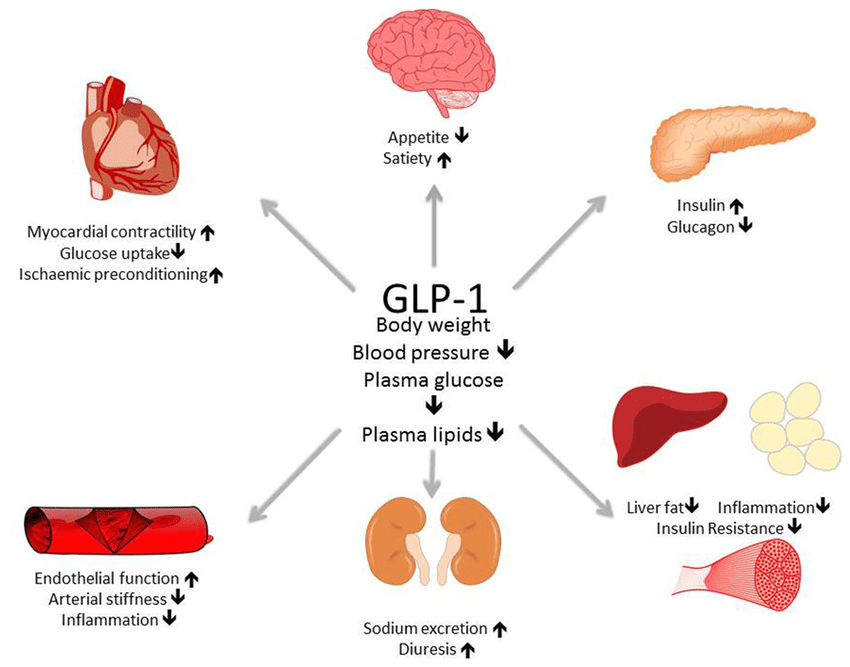
Glucagon-like peptide-1 (GLP-1) drugs, including Ozempic, are primarily used to control blood sugar in people with type 2 diabetes by stimulating insulin production and lowering glucagon release. This class of drugs works by binding to GLP-1 receptors in the pancreas, promoting insulin secretion in response to high blood glucose levels. While these drugs were originally studied for metabolic effects, their interactions with other systems of the body, particularly the brain, have sparked interest in their broader therapeutic potential.
The brain health benefits of GLP-1 drugs are linked to their ability to cross the blood-brain barrier and act on GLP-1 receptors in the brain. These receptors are involved in numerous brain functions, including cognitive processes and neuroprotection. Preclinical studies suggest that GLP-1 drugs reduce inflammation and oxidative stress in the brain, both of which are associated with neurodegenerative diseases like Alzheimer’s. Furthermore, they may promote neuroplasticity, the brain’s ability to adapt and repair itself, which is critical for maintaining cognitive function as we age.
Research into GLP-1 receptor agonists has demonstrated promising results in animal models of Alzheimer’s disease, where these drugs were shown to reduce the buildup of amyloid plaques, a hallmark of the disease. Additionally, GLP-1 drugs appear to support neuronal survival, potentially slowing down the progression of neurodegeneration. Although human trials are still ongoing, these early findings are generating excitement about the potential use of GLP-1 drugs in treating or preventing cognitive decline in humans.
If further studies confirm the neuroprotective effects of GLP-1 drugs in humans, they could be a game-changer for treating Alzheimer’s and other neurodegenerative conditions. With the global population aging and the prevalence of these diseases rising, there is a pressing need for new therapies that cannot only manage symptoms but also address the underlying causes of neurodegeneration. GLP-1 drugs might offer a dual benefit—improving metabolic health while also protecting the brain.
GLP-1 drugs like Ozempic are already transforming the treatment landscape for type 2 diabetes, but their potential to enhance brain health opens up exciting new possibilities. By reducing inflammation, promoting neuroplasticity, and protecting neurons, these drugs may hold promise in the fight against Alzheimer’s and other cognitive disorders. As research continues, the prospect of GLP-1 drugs serving a dual purpose—managing metabolic health and preserving cognitive function—is an encouraging step toward a future with better outcomes for patients with diabetes and neurodegenerative diseases alike. Stay tuned to “The Hitchhiker’s Guide to Medicine” as we uncover more marvels and milestones in the field of medical science. Until then, keep exploring, and stay curious!
 A Hitchhiker's Guide to Medicine
Leave a comment