

Welcome back to another adventure along The Hitchhiker’s Guide to Medicine! Today, we will learn about how gene therapy can help patients with a rare retinal disorder: Bothnia Dystrophy.
In an exciting development for those affected by Bothnia dystrophy (BD), gene therapy is emerging as a promising treatment for this rare inherited retinal disorder. Bothnia dystrophy, a subtype of retinal dystrophy, primarily affects vision and is prevalent in certain regions, notably Northern Sweden. The condition is caused by a mutation in the RLBP1 gene, which plays a critical role in normal visual function by aiding in the regeneration of the photoreceptors in the retina. For patients with this mutation, night blindness and progressive vision loss are common, leading to significant vision impairment over time.
Bothnia dystrophy falls under the umbrella of retinitis punctata albescens, where the retina, responsible for converting light into signals the brain interprets as vision, begins to malfunction. This malfunction happens because the RLBP1 gene mutation disrupts the recycling of retinaldehyde, a molecule essential for phototransduction—the process by which photoreceptor cells in the retina convert light into electrical signals. This failure leads to the gradual degeneration of the photoreceptors, especially affecting night vision and peripheral vision in early stages, followed by a decline in central vision as the disease progresses.
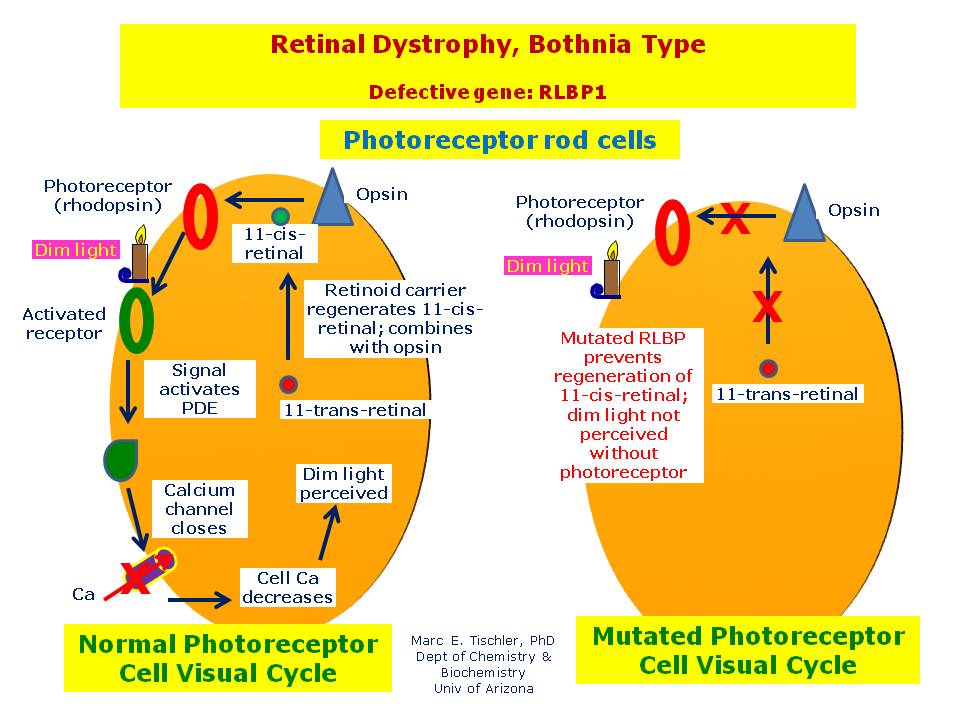
The study highlights a breakthrough in the treatment of BD using gene therapy. Researchers delivered a functional copy of the RLBP1 gene into the retina of patients via an adeno-associated virus (AAV) vector. These vectors are common in gene therapy, as they are safe, non-pathogenic, and effective in delivering genetic material to targeted cells. Once inside the retinal cells, the healthy gene begins producing the necessary proteins that were previously dysfunctional due to the mutated RLBP1 gene.
Initial trials show promising results, with patients experiencing improved visual function and night vision—a critical step forward in treating retinal dystrophies that were previously untreatable. The improvements are believed to be the result of photoreceptor preservation and better support for retinal cells.
Gene therapy for BD aims to correct the underlying cause of the disease at the molecular level. By introducing a healthy copy of the RLBP1 gene, the therapy restores the proper biochemical pathways responsible for the visual cycle. In this case, the viral vector, often administered through a subretinal injection, delivers the gene directly into the retinal cells. Once inside, the cells begin to express the gene and produce the necessary protein, which restores the function of the visual cycle and prevents further degeneration.
One of the challenges with BD, as with other forms of inherited retinal dystrophy, is that it progresses gradually. Many patients retain some degree of vision into adulthood before the degeneration becomes severe. This makes early intervention with gene therapy crucial, as it may preserve vision and slow disease progression.
The success of gene therapy in treating BD has broader implications for other forms of inherited retinal diseases. This approach represents a shift from symptom management to addressing the root cause of genetic disorders. Although more research is necessary to determine the long-term efficacy and safety of the therapy, the early signs are hopeful. Patients with BD and similar conditions may soon have access to treatments that can preserve their vision and improve their quality of life.
The research team is continuing to evaluate the long-term effects of gene therapy in BD patients, including whether the improvements in vision are sustainable and if the treatment can halt further degeneration of the retina. As gene therapy advances, it is expected that this technology could be applied to a wide range of genetic disorders beyond the eye, offering a new avenue of hope for patients with conditions previously thought to be untreatable.
In conclusion, gene therapy for Bothnia dystrophy represents a groundbreaking development in the field of ophthalmology and genetic medicine. It offers new hope to patients who have long been told that their condition was untreatable. With continued research and clinical trials, gene therapy could soon become the standard for treating a variety of inherited retinal diseases, changing the lives of countless individuals worldwide. This development not only highlights the power of modern biotechnology but also underscores the importance of continued innovation in the treatment of genetic disorders.
 A Hitchhiker's Guide to Medicine
Leave a comment