
Welcome back to another journey along The Hitchhiker’s Guide to Medicine. Unfortunately, I was on break the past two months, juggling AP test and DECA Nationals. However, all of this has ended, and the guide will once again continue its journey, teaching travelers the biggest discovered and the most interested trivialities in the medicine.
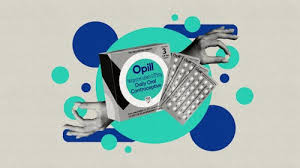
Today, we will explore an amazing breakthrough in the medical world: The first over-the-counter oral contraceptive, Opill. I stumbled upon this breaking news while researching for my previous NHD topic, Margaret Sanger, and her role in the development of the first oral contraceptive.
Opill is a progestin-only form of birth control. It uses a single hormone, called progestin(or levonorgestrel), to prevent pregnancy. But what is progestin? Progestin is the synthetic, man-made version of Progesterone, a natural hormone produces in the ovaries of women to regulate the menstrual cycle and supporting healthy pregnancy.

When Progestin is ingested on a daily basis, it affects a women’s reproductive health by:
- Suppressing the release of Gonadotropins, hormones which stimulate the development of an egg and lead to ovulation
- thickening cervical mucus, which prevents sperm from traveling and fertilizing the egg
- reduces endometrial cell, which prepares the uterus for pregnancy for growth, proliferation. Additionally, it also lowers the secretion of endometrial glands, which nourish an embryo.
The introduction of Opill could significantly alter the landscape of family planning and reproductive health. By providing an easier and private way to obtain birth control, it may help reduce the number of unintended pregnancies, which remains a major challenge in both developed and developing countries. Furthermore, it empowers women to take control of their reproductive health with immediacy and discretion.

As we continue to explore and celebrate significant advancements in medicine on this blog, Opill stands out as a profound leap forward in empowering women and improving reproductive health worldwide. It’s a testament to how far we have come since the days of Margaret Sanger, and a reminder of the potential future innovations that could continue to reshape our world. Stay tuned to “The Hitchhiker’s Guide to Medicine” as we uncover more marvels and milestones in the field of medical science. Until then, keep exploring and stay curious!
 A Hitchhiker's Guide to Medicine
Leave a comment